What is BPC-157?
BPC-157 is a synthetic peptide made of 15 amino acids, derived from a protein found in human gastric juice. Researchers originally studied it for protecting the gut lining, and the name itself stands for “body protection compound.”[1] Over the past two decades, interest has shifted toward its apparent ability to speed up healing in connective tissue.
It is sold online as a “research chemical,” which is a legal gray area rather than a stamp of quality. That distinction matters, and we will come back to it.
How it is thought to work
In laboratory models, BPC-157 appears to promote angiogenesis, the growth of new blood vessels, and to upregulate growth factor receptors on tendon cells. One frequently cited cell study found that it increased the survival and migration of tendon fibroblasts, the cells responsible for laying down new collagen.[2]
The peptide accelerated the outgrowth of tendon fibroblasts and enhanced their migration, two steps that are essential to early tendon repair.
The mechanism is plausible and biologically interesting. But plausible mechanisms in a dish do not guarantee a meaningful effect in a living person, which is exactly why human trials matter.
What the research shows
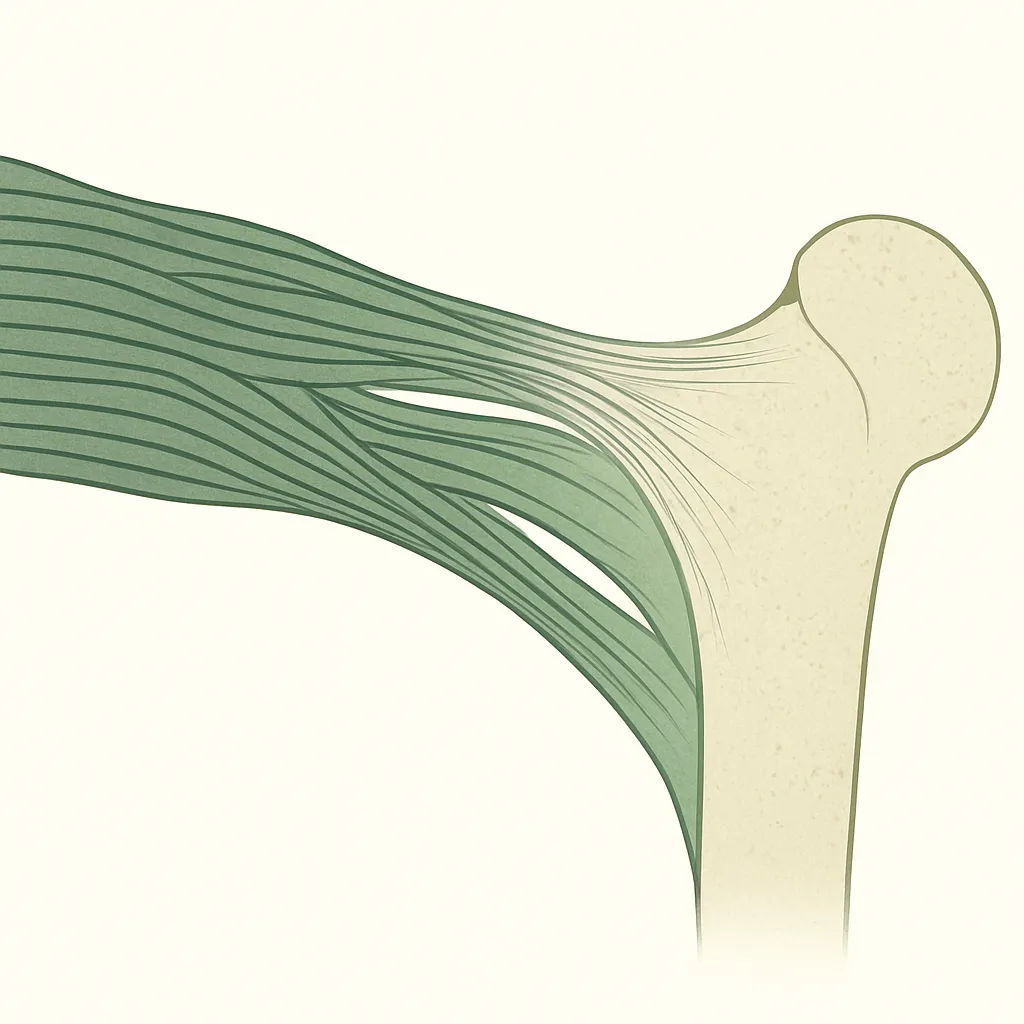
The strongest evidence comes from animal models. In a controlled rat study, transected Achilles tendons treated with BPC-157 showed faster functional recovery and better tendon-to-bone healing than untreated controls.[3] A 2019 review summarized a consistent pattern of accelerated soft-tissue healing across multiple rodent experiments.[4]
Evidence note
Human vs. animal data
The gap between the animal literature and the human literature is the single most important thing to understand before considering this peptide.
| Dimension | Animal / in-vitro | Human |
|---|---|---|
| Number of studies | Dozens | No published RCTs |
| Tendon healing effect | Consistently positive | Unknown |
| Dosing established | Per body weight, in rats | Not established |
| Long-term safety | Short follow-up only | Not characterized |
Forms and dosing claims
Online vendors sell BPC-157 as a powder for injection, as capsules, and as nasal sprays. Because no regulator has approved it, there is no verified dose, no purity standard, and no guarantee that the vial contains what the label claims.
Safety note
Safety and legal status
In 2023, BPC-157 was nominated to an FDA list of bulk drug substances that pose significant safety risks for compounding, citing insufficient safety data; the nomination was later withdrawn.[5] It is not an approved drug for any condition.
For competitive athletes, the status is unambiguous: BPC-157 is prohibited at all times under the World Anti-Doping Agency code as a non-approved substance.[6] A positive test can end a season or a career.
The bottom line
BPC-157 occupies an unusual position: the rodent and cell-culture science is compelling, but no controlled human trial has tested whether it actually speeds tendon healing in people. Until that research exists, claims about human benefit are extrapolation rather than fact. See how this rates against other recovery interventions in our evidence ratings.
A tendon injury you are dealing with right now is better served by what already has that track record: progressive loading, patience, and a physical therapist or sports medicine clinician who can guide the process.
Medical disclaimer
This article is for educational purposes only and is not medical advice. It does not establish a doctor-patient relationship and should not replace consultation with a qualified healthcare professional. Never start, stop, or change a treatment based on what you read here without speaking to your clinician.
Frequently asked questions
Does BPC-157 actually help tendons heal?
In rodent studies, BPC-157 has accelerated tendon and tendon-to-bone healing. There are currently no published randomized controlled trials in humans, so the effect in people is unproven. It is not an approved drug and is prohibited in regulated sport.
How strong is the evidence that BPC-157 works in humans?
The strongest evidence comes from animal models, including dozens of rodent studies and a controlled rat study in which BPC-157 sped tendon-to-bone healing after an Achilles tendon injury. No randomized controlled trials have been published in humans, so the human effect remains unknown. Because rodent tendon physiology differs from human tendon physiology, these results are best treated as hypothesis-generating rather than as proof of benefit in people.
Is BPC-157 approved by the FDA?
No. BPC-157 was nominated to an FDA list of bulk drug substances considered to pose significant safety risks for compounding, citing insufficient safety data; the nomination was later withdrawn and BPC-157 now appears on the FDA's list of substances nominated but withdrawn. It is not an approved drug for any condition.
Can athletes use BPC-157?
No. It is prohibited at all times under the World Anti-Doping Agency code as a non-approved substance, and a positive test can end a season or a career. Tested athletes should avoid it.
Why is BPC-157 sold online if it isn't approved?
It is marketed as a research chemical intended for laboratory study, not for human use; that label is a legal gray area rather than a mark of quality or safety. Because no regulator has approved it, there is no verified dose, no purity standard, and no guarantee that a vial contains what the label claims.
References
- Sikiric P, Seiwerth S, Rucman R, et al. Stable gastric pentadecapeptide BPC 157: novel therapy in gastrointestinal tract. Current Pharmaceutical Design. 2011. View on PubMed
- Chang CH, Tsai WC, Lin MS, Hsu YH, Pang JH. The promoting effect of pentadecapeptide BPC 157 on tendon healing involves tendon outgrowth, cell survival, and cell migration. Journal of Applied Physiology. 2011. View on PubMed
- Krivic A, Anic T, Seiwerth S, Huljev D, Sikiric P. Achilles detachment in rat and stable gastric pentadecapeptide BPC 157: Promoted tendon-to-bone healing and opposed corticosteroid aggravation. Journal of Orthopaedic Research. 2006. View on PubMed
- Gwyer D, Wragg NM, Wilson SL. Gastric pentadecapeptide body protection compound BPC 157 and its role in accelerating musculoskeletal soft tissue healing. Cell and Tissue Research. 2019. View on PubMed
- U.S. Food and Drug Administration. Certain bulk drug substances for use in compounding that may present significant safety risks (BPC-157 nominated but withdrawn). FDA 503A Bulk Drug Substances List. 2023. View on PubMed
- World Anti-Doping Agency. Prohibited List: BPC-157 under S0 (non-approved substances). WADA Prohibited List. 2025. View on PubMed